
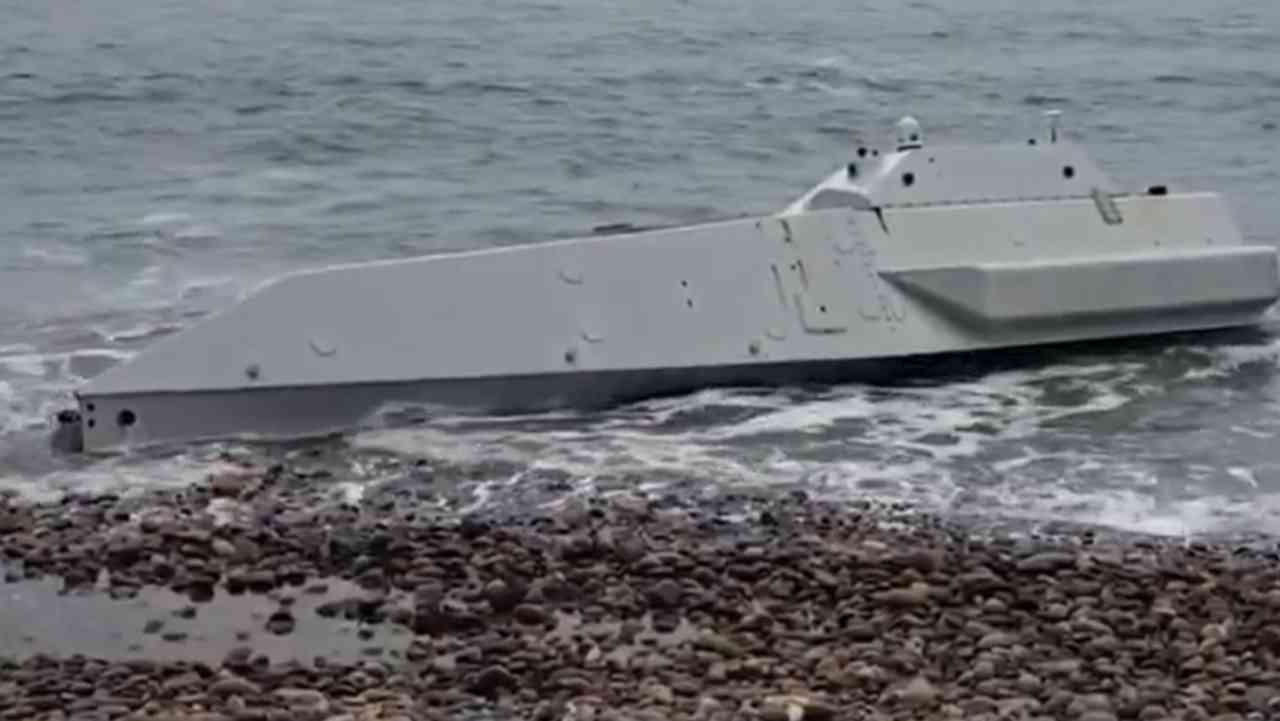
An unmanned naval drone of American origin was found by civilians on the coast of the city of Ordu, in Turkey.
The equipment, identified as an AEGIR-W model, was developed by the U.S.-based company Sierra Nevada Corporation.
According to local authorities, the vehicle will undergo a detailed inspection before being destroyed. There is still no official confirmation on how the drone arrived in the region.

There are indications that the AEGIR-W may have been used in tests related to the conflict in Ukraine, although this information has not been independently verified so far.
AEGIR is an unmanned surface vehicle (USV) approximately 10 meters long, capable of operating autonomously. It has an estimated range of up to 900 kilometers and can reach speeds exceeding 25 knots. In addition, the system can carry payloads of up to 300 kilograms.
According to the manufacturer, the AEGIR family was designed for modular missions, including intelligence, surveillance, and reconnaissance (ISR), electronic warfare, offensive operations, and autonomous resupply.

In practice, this type of vessel is designed to travel long distances without a crew, carrying sensors or operational payloads, enabling it to operate in high-risk areas where manned vessels would be more exposed.
The discovery draws attention as it involves an advanced military system designed to operate in contested environments and perform strategic roles such as reconnaissance, electronic warfare, and support for attack operations.
+ Tesla owner brags about automatic door closing and gets clapped back by Toyota driver
Source and images: X @SavunmaSanayiST. This content was created with the help of AI and reviewed by the editorial team
Görseller üzerinden yapılan incelemelerde, bahsi geçen İDA’nın, AEGIR ailesinin AEGIR-W adlı üyesi olduğu görülüyor.
Yaklaşık 10 metre uzunluğundaki AEGIR-W, azami 900 kilometre menzile sahip ve 25+ knot sürate ulaşabiliyor. Otonom olarak görev icra edebilen İDA’nın faydalı yük… https://t.co/Uqdb24Z73G pic.twitter.com/jZ3DjBbdx0
— SavunmaSanayiST.com (@SavunmaSanayiST) March 21, 2026
